
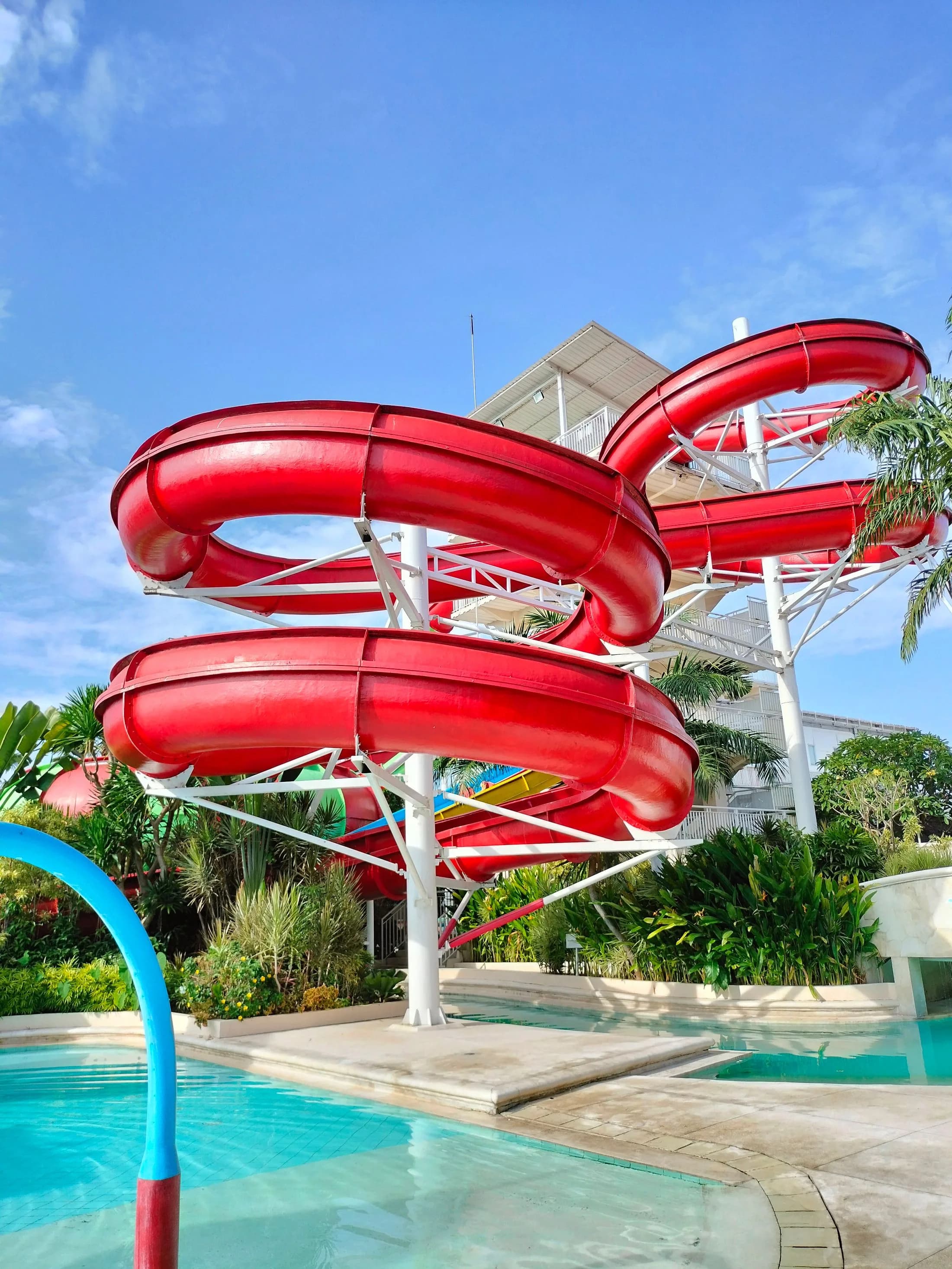
Water parks combine mechanical risk with the risks of water itself. A ride operator in a water park needs to think about structure, flow, people and water quality at the same time. IS 15492 sets out requirements for water-park attractions; here are the essentials we cover in the Aquatic Operations course.
Slides and structures
- Inspect slide joints, sealant and fasteners monthly in peak season; UV and chlorine degrade sealants faster than most people expect.
- Check towers, stairs and platforms for corrosion and loose handrails.
- Confirm water flow on every slide before opening. Too little water increases friction and injury risk.
Dispatch
Dispatch intervals keep riders from colliding. Use the manufacturer’s interval as the minimum, use a light or signal system where fitted, and never let queues pressure staff to dispatch early.
Water quality
Test chlorine and pH at the frequencies your local health authority specifies and record the results. Clear, balanced water is also a safety issue: lifeguards must be able to see the pool floor.
People
Coordinate operators and lifeguards at every attraction with a clear communication plan, including what happens when a rider does not exit a slide.
At a water park, the most important safety system is a well-trained team that talks to each other.
About the author
Farah Siddiqui · Education Chairperson (sample)Farah has trained ride operators and inspectors for more than twelve years and leads IAARSO’s seminar programme.